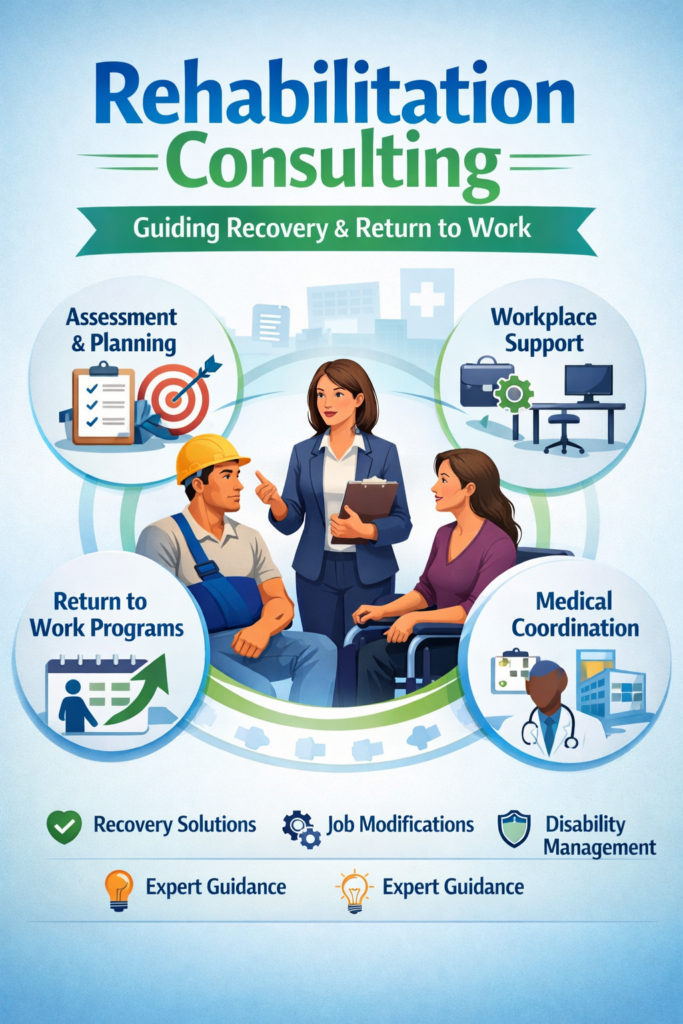
Recovering from injury, illness, or surgery often requires more than medical treatment alone. Individuals, families, and professionals must navigate therapy options, long-term care decisions, and functional goals. Rehabilitation Consulting provides expert guidance to coordinate care, optimize recovery, and ensure individuals receive the right services at the right time.
By combining clinical expertise, functional assessment, and care coordination, rehabilitation consultants help clients achieve meaningful, sustainable outcomes while avoiding gaps or inefficiencies in care.
What Is Rehabilitation Consulting?
Rehabilitation Consulting is a professional service focused on evaluating functional limitations, planning rehabilitative care, and coordinating services to support recovery and long-term independence.
Purpose of Rehabilitation Consulting
Rehabilitation consulting helps:
Identify appropriate therapy and treatment services
Establish realistic functional goals
Coordinate care across providers
Support long-term recovery planning
Who Benefits From Rehabilitation Consulting?
Individuals recovering from injury or surgery
People with chronic or disabling conditions
Families navigating complex care systems
Attorneys and insurers managing rehabilitation-related cases
The Role of a Rehabilitation Consultant
Rehabilitation consultants act as coordinators, advisors, and advocates throughout the recovery process.
Functional Assessment and Evaluation
Consultants assess physical, cognitive, and emotional function to understand limitations and recovery potential.
Care Planning and Coordination
They recommend appropriate therapies, treatment frequency, and duration based on individual needs.
Ongoing Monitoring and Adjustment
As recovery progresses, plans are adjusted to reflect improvements, setbacks, or changing goals.
Core Services in Rehabilitation Consulting
Rehabilitation consulting covers multiple areas to ensure comprehensive support.
Medical and Therapy Coordination
Collaboration with physicians and specialists
Physical, occupational, and speech therapy planning
Behavioral and cognitive rehabilitation support
Functional and Vocational Assessment
Activities of daily living (ADL) evaluation
Return-to-work readiness assessments
Job task analysis and accommodation planning
Equipment and Assistive Technology Guidance
- Mobility aids and durable medical equipment
Adaptive technology recommendations
Training for safe and effective use
Long-Term Recovery and Support Planning
- Transition from acute care to community-based services
Long-term therapy projections
Home and environmental modification planning
Rehabilitation Consulting in Complex Cases
Rehabilitation consulting is particularly valuable in cases involving significant or long-term impairment.
Catastrophic Injury Recovery
For spinal cord injuries, traumatic brain injuries, or amputations, consultants coordinate intensive, multidisciplinary rehabilitation plans.
Chronic Condition Management
Individuals with neurological or degenerative conditions benefit from ongoing assessment and evolving care strategies.
Post-Surgical and Orthopedic Rehabilitation
Consultants help ensure timely therapy progression and prevent complications or delayed recovery.
Rehabilitation Consulting and Legal or Insurance Cases
Rehabilitation consulting often plays a critical role in legal and insurance-related matters.
Supporting Personal Injury and Workers’ Compensation Cases
Consultants document functional limitations, rehabilitation needs, and recovery timelines.
Coordinating With Life Care Planning
Rehabilitation consulting frequently supports life care plans by outlining therapy needs and long-term functional expectations.
Providing Defensible Documentation
Objective assessments and evidence-based recommendations strengthen reports used in legal or claims settings.
Benefits of Rehabilitation Consulting
Engaging a rehabilitation consultant offers measurable advantages.
Improved Recovery Outcomes
Personalized planning helps individuals reach optimal functional levels.
Reduced Care Gaps and Delays
Coordinated services prevent missed therapy opportunities and fragmented care.
Cost-Effective Care Management
Appropriate service selection reduces unnecessary treatments and expenses.
Greater Confidence for Patients and Families
Clear guidance reduces confusion and stress during the recovery journey.
Evidence-Based Approach in Rehabilitation Consulting
Modern rehabilitation consulting relies on research-supported practices.
Clinical Guidelines and Best Practices
Recommendations are based on current rehabilitation standards and peer-reviewed research.
Individualized, Goal-Oriented Planning
Care plans reflect the individual’s condition, abilities, and lifestyle goals.
Ongoing Outcome Measurement
Progress is tracked to ensure therapies remain effective and appropriate.
Choosing the Right Rehabilitation Consultant
Selecting a qualified professional is essential.
Credentials and Experience
Look for consultants with backgrounds in rehabilitation, healthcare, or life care planning.
Multidisciplinary Collaboration
Effective consultants work closely with medical providers, therapists, and care teams.
Communication and Transparency
Clear explanations and regular updates are critical for successful outcomes.
When to Engage Rehabilitation Consulting
Early involvement often produces the best results.
Immediately After Injury or Diagnosis
Early planning helps prevent delays and supports smoother recovery.
During Transitions of Care
Consultants guide transitions from hospital to outpatient or community-based care.
When Recovery Progress Stalls
Re-evaluation helps identify barriers and adjust strategies.
The Future of Rehabilitation Consulting
As healthcare becomes more complex, rehabilitation consulting continues to evolve.
Greater integration of tele-rehabilitation
Increased focus on patient-centered outcomes
Stronger collaboration with life care planning and legal professionals
Emphasis on long-term quality of life and independence
Rehabilitation consulting will remain a vital service in ensuring effective, coordinated recovery care.
Conclusion
Rehabilitation Consulting provides structured, expert guidance for individuals navigating recovery from injury, illness, or surgery. By combining functional assessment, therapy coordination, and long-term planning, rehabilitation consultants help optimize outcomes, reduce stress, and improve quality of life.
Whether supporting personal recovery, family decision-making, or professional case management, rehabilitation consulting delivers clarity, coordination, and confidence throughout the rehabilitation process.